Why Do Beef Prices Keep Rising? Experts Explain the Reasons
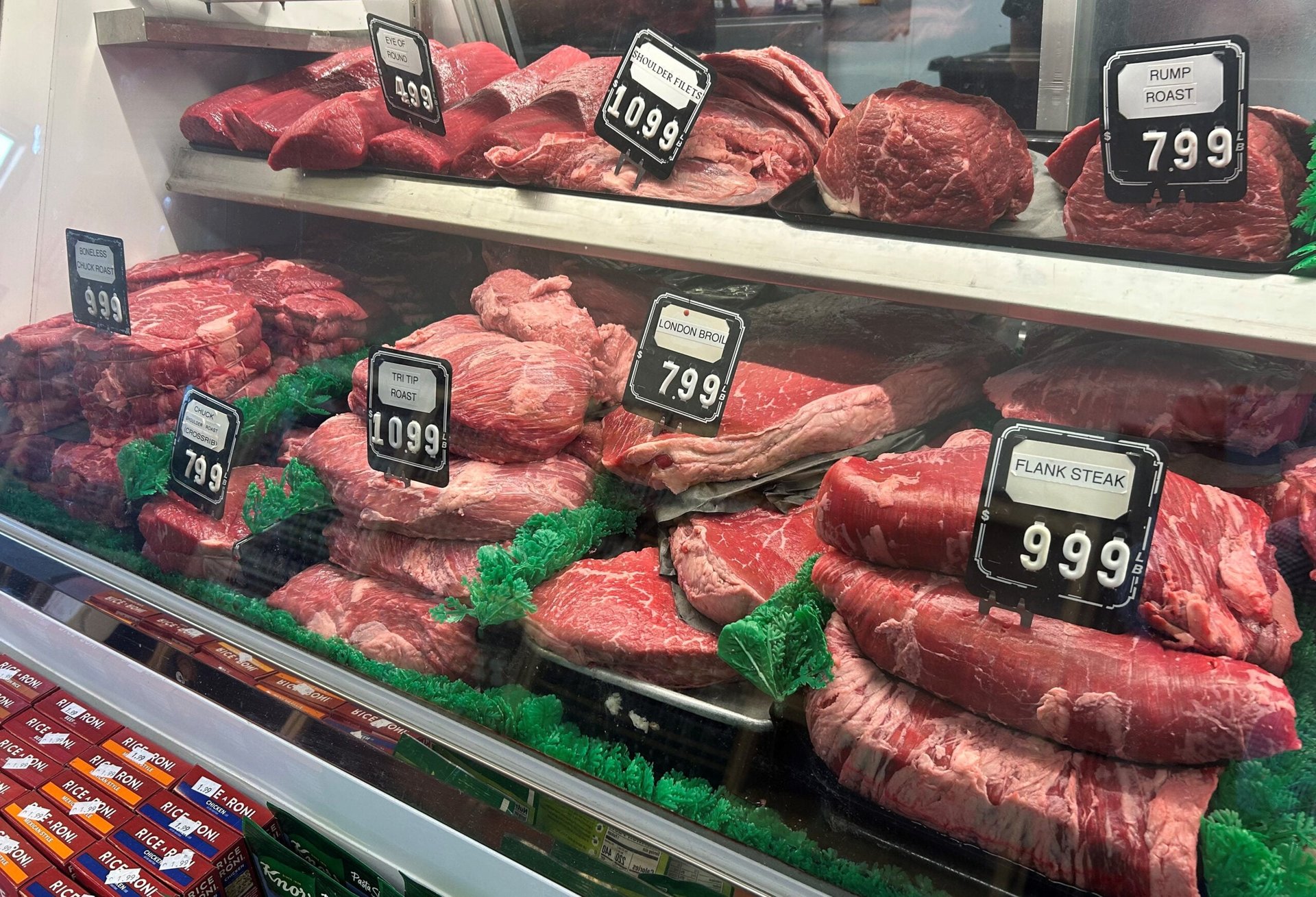
The retail price of beef has risen across the board from its value one year ago, and experts see no sign of it slowing down anytime soon.
How did we get here? Dr. Daniel Sumner, professor emeritus of agricultural economics at the University of California, Davis, says it all comes down to the issue of high demand and low supply. But Brian Stephenson, president of the Shasta County Cattlemen’s Association, says the profit margins of international meat suppliers may have more to do with it.
Find out why beef prices are so high below.
Why Are Beef Prices So High?
Sumner says the increased demand for protein in recent years is a major factor contributing to higher beef prices.
“There’s been a lot of talk and interest in increasing protein, especially high-quality, balanced protein in people’s diets. Whether you’re an adult, or you’re young and you exercise a lot, or you don’t, the message is eat more protein,” Sumner said.
This move has encouraged consumers to spend more on high-quality protein during their grocery shopping trip. But, from chicken and pork, milk and even Greek yogurt, there are many types of protein on the market. Why are beef prices rising in particular?
Sumner says this is due to interactions with the US cattle herd in terms of history.
Since Jan. 1, 2026, the size of the US cattle herd was 86.2 million, the smallest it has been in 75 years – and has been declining since 2021. Meanwhile, live cattle sales prices have been rising since 2020. This presents a problem for cattle breeders to achieve their high record, or else they have to maintain their high price. herd to build a population back?
“What people have been doing is putting many of them on the market now,” said Sumner.
This has caused the US cattle herd to “(settle) at this really low level,” keeping a low supply of beef on the market. When combined with historically high demand for protein, Sumner says this relationship is effectively driving up beef prices.
Why is the Nation’s Cattle Herd So Small?
Sumner has several theories as to how the cattle herd became so small.
One is productivity. According to Sumner, advances in technology and science have allowed today’s cattle to produce more meat than ever before. Because of this, fewer cows are needed to meet the international demand for beef, causing the number of cows to gradually decrease over time.
Another is the increase in the sale price of cattle that occurs in 2023 and is held at a fixed price until 2025. Sumner says this caused ranchers to sell “old cows and heifers to take advantage of what they thought would be temporary high prices.” In fact, cattle prices peaked in late 2025 and 2026, delaying the herd rebuilding period that ranchers may have expected to be here by now.
Sumner also thinks that the smaller cattle numbers can be attributed to the decline in US beef consumption that occurred before the most recent demand.
What Are Local Farm Owners Driving Beef Prices?
Stephenson admits that demand “hasn’t slowed down,” and has remained steady despite rising beef prices. However, he has a different view on the supply side of things, and the factors that may actually play a role in raising prices.
For one thing, he said he doesn’t think ranchers should be blamed for the small herd size.
“If we are talking about the livestock family, nothing we will do will benefit today if it will kill tomorrow,” said Stephenson in response to a question that asked if the ranchers are spending a lot of money on cattle by harming the herd.
He emphasized that farmers cannot decide the price at which they sell their cattle.
“We were seen in the market, and the guys above us were seen by the meat packers,” said Stephenson.
Instead, Stephenson points to drought and high input costs as the reason for the decline in herd size. According to him, the drought in “important cattle regions” forced the breeders to sell a large part of their herd. Stephenson also said many ranchers are reducing their herds when feed prices rise in 2019 and 2020.
As for beef prices, the feeling among local ranchers is that there may be more powerful factors at play than simple supply and demand.
According to Stephenson, imports from the international beef market played a major role in controlling US beef prices. But since the time of COVID, travel restrictions have reduced the number of imports in the US market. These impacts have extended to 2026 due to the current costs in foreign countries and the ban on the import of cattle from Mexico to prevent the spread of the New World screwworm.
This reliance on domesticated cattle has increased input costs throughout the beef industry, with a major impact on the four meatpackers. Tyson, JBS, Cargill and National Beef control up to 85% of the US beef market.
These rising input costs, says Stephenson, are passed on to the “man in the shop” by these powerful meatpacking companies, who drive prices to meet profit margins.
When Will Beef Prices Fall?
According to Sumner, “nobody thinks prices are going to drop anytime soon.”
The good news however is that the issue of high demand and low supply may continue.
Sumner said the demand for beef “may be saturated,” in other words, it won’t get much bigger than this. If so, he says “that will give the offering side an opportunity to follow through.”
And Stephenson is optimistic that supply will eventually reach a stable level again.
“Nationally speaking, the American cattle herd can rebuild. They’ve gone through these cycles in history from the 1920s, ’30s, ’40s through the 2000s. The numbers go up and the numbers go down,” Stephenson said.
Searchlight Record reporter Jessica Skropanic contributed to this report.
Drew Askeland covers government news for Redding and Shasta County, as well as anything else that needs reporting for the Record Searchlight and the USA Today Network. Reach out to him at [email protected] or (530) 225-8247. To support and support this project, please register today. Thank you.
This article first appeared in the Redding Record Searchlight: Why do beef prices keep going up? Experts explain the reasons.
Drew Askeland, USA TODAY NETWORK / Redding Record Searchlight reports
USA TODAY Network via Reuters Connect