Will USPS Raise Prices Again? Debate Surrounds the Future of Finance
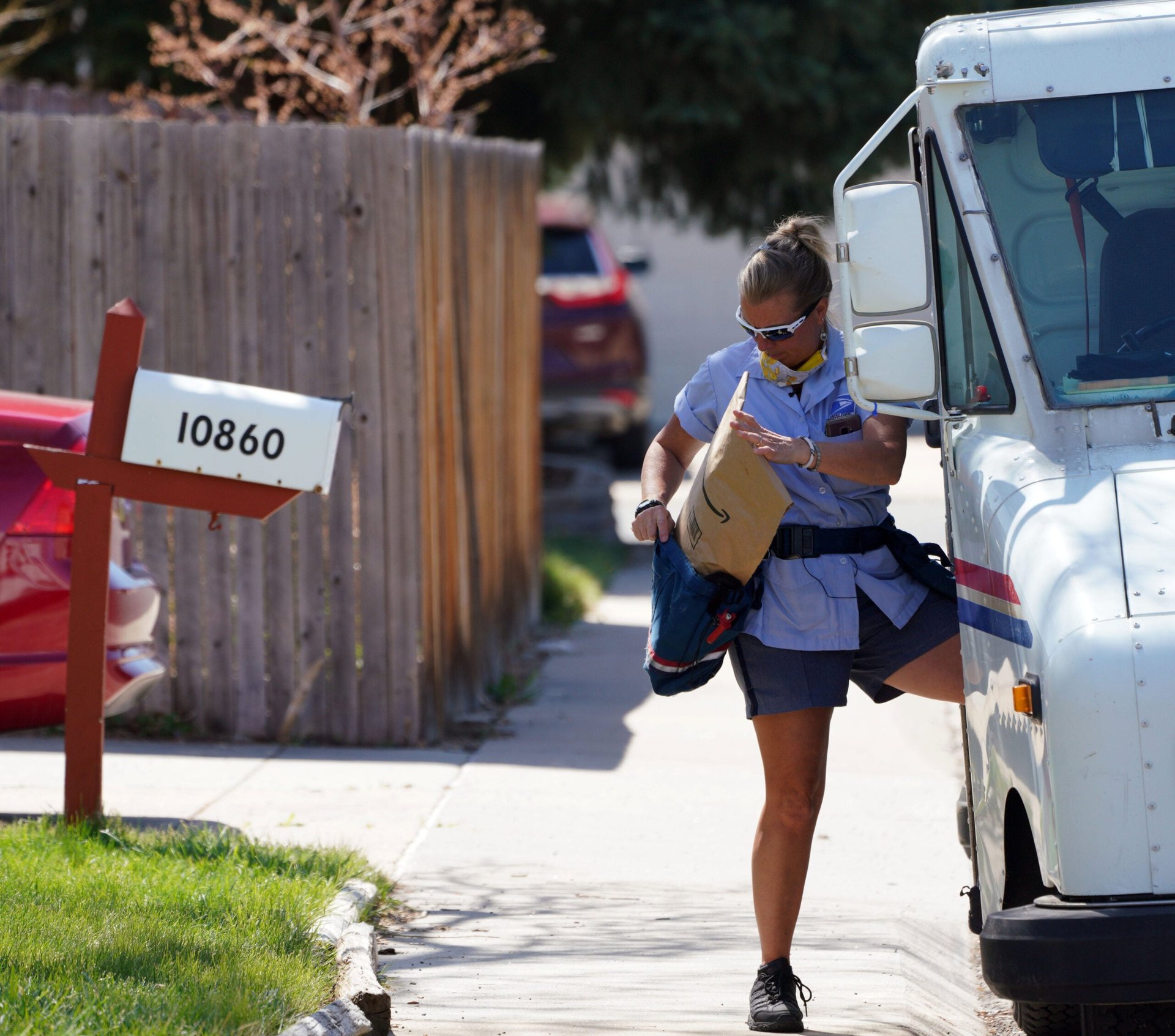
Six months after getting a new postmaster, the US Postal Service faces major challenges as it tries to cut costs and eliminate heavy losses while delivering mail by hand to nearly every address six days a week.
The service’s plight comes as President Donald Trump continues to attack mail-in voting, which he says is linked to “Mass Voting Corruption. However, there is no evidence of widespread voter fraud with mail-in ballots, and voting rights groups fear that his attacks will undermine the overall credibility of the postal service. Trump has floated the idea of privatizing the service or merging it with another federal agency.
Congress is holding postal service oversight hearings on March 17, and postal officials are expected to ask officials to borrow billions of dollars to keep operating through 2027, as well as to protect their ability to raise rates. Unlike the military or Homeland Security, the postal service is supposed to be able to cover its costs but often falls short.
“Funds are bad and they’re losing billions,” said Leo Raymond, executive director of the Virginia-based Mailers Hub, an industry association. “Congress must decide what the postal service should do in the 21st century, because taxpayers can no longer support the full cost of the postal service. The economy is changing but no one wants to deal with it.”
The Postal Service’s internal inspector general has repeatedly identified financial failures in the system, including last year’s use of nearly $19 million in unexpectedly high labor costs as part of other cost-cutting measures. Last fall, the service reported an annual loss of $9 billion, which was a slight improvement over the $9.5 billion loss the year before.
For many Americans, the postal service is the most visible connection they have to the federal government, as its 640,000 employees go out every day to deliver holiday cards, drop off packages and dispense prescriptions. And it’s still one of the most popular government agencies: A 2024 Pew Research Center survey found that 72% of Americans have a favorable opinion of the service, behind only the National Park Service and 10 points ahead of NASA.
The postal service is being pressured by the growth of online retailers such as Amazon and the decline in first-class mail volume: Since the late 1990s, first-class mail volume has declined by 80%. Unlike UPS or FedEx, the postal service must charge the same price to send a letter anywhere in the United States, no matter how far. The service receives no taxpayer funding for ongoing operating costs.
Mail volume peaked in 2006 when 213 million pieces were delivered, and fell to about 112 million pieces in fiscal year 2024, the latest year for which data was available.
The postal service is overseen by a five-member Postal Regulatory Commission whose members are appointed by the president. Congress also has jurisdiction over the service, and members often lobby to stop post office closings in their states and other proposed cost-cutting measures.
Other groups representing paper manufacturers, greeting card companies and publishers of magazines and newspapers say the postal service should improve its first-class mail service and work to keep rates stable.
The Postmaster General is Committed to Continuous Change
Postal service leaders say they intend to continue at least the changes introduced in 2021 under the “Delivering For America” plan that have seen first-class mail prices rise along with consolidation, and in some cases slower mail delivery.
Today, a first-class stamp costs 78 cents, up from 55 cents for most of 2021. Businesses that depend on sending a large number of letters say it’s unfair to charge 41% more, especially when first-class letters are now usually delivered slower than in years past.
Speaking to the postal service’s governing board last month, Postmaster General David Steiner acknowledged the challenges ahead. Steiner was a longtime board member at FedEx, and unionized postal service workers criticized his appointment as postmaster over concerns that he was too aligned with private package delivery services. The board appointed Steiner in May and he took the position in July.
“We can’t choose whether the market changes. We can only choose whether we adapt. And as I’ve said before, we can’t cut corners on our way to success,” Steiner told the board.
The Postal Service has a current goal of delivering first-class mail 88% of the time, which is significantly lower than its goal of 92.5% by 2023. Part of the challenge, the inspector general has previously reported, is that the postal service has not adequately adjusted its system to compensate for the decline in first-class mail volume while maintaining its obligation to deliver all first-class mail volume.
Before former Postmaster General Louis DeJoy stepped down in the spring of 2025, he signed an agreement with Elon Musk’s DOGE team for a cost-cutting review.
Among the changes Steiner is exploring is whether the postal service could help Americans make returns on things like Amazon purchases, and allow small businesses to contract for delivery the way Amazon and other large retailers have historically.
Steiner earlier this month told reporters that the postal service could run out of money next year unless the agency gets approval to borrow billions more to cover costs. Since 2007, the postal service has lost money nearly every fiscal year, according to the US Government Accountability Office. Losses from fiscal years 2007 to 2024 have reached $109 billion, the watchdog agency said.
The postal service declined an interview request. Steiner is scheduled to appear before the House Committee on Oversight and Government Reform on March 17.
Raymond, of trade group Mailers Hub, said he will be watching closely to see how Steiner is received by Congress. He said that Dejoy’s “Delivering For America” program is not very popular in Congress, but he also agreed that the postal service must take a closer look at how it works if few people send first-class mail. Raymond said those changes could be anything from reducing delivery to changing union contracts to allow for more part-time workers.
“There’s a romantic idea of what the post should be, based on what it was,” he said. “But the world has changed.”
Union Workers Concerned About Privatization
Most postal service workers are unionized, and the American Postal Workers Union has been fighting efforts to privatize parts of the service. The union argues that the service is just that: a service to the American people, not a company meant to extract every last dollar from customers.
The union said Trump’s proposals on privatization would enrich private investors while weakening one of the federal unions created by the Constitution.
“Such a move would raise prices, lead to service cuts, and threaten the concept of mail and package services with one affordable price for everyone regardless of where they live — a blow to America’s heartland, especially rural communities and seniors who rely on the mail for prescriptions,” the union said in a statement.
The Postal Debate and the Role of the Post Office
The ongoing financial challenges facing the postal service come as Trump has repeatedly questioned voting by mail, a common practice across the country. Trump says the votes can be trusted, although he has not provided any evidence that they are not safe.
“And there are no more voting rights that are invalid except for sickness, disability, war or travel,” Trump said during his State of the Union speech in February. “Nothing.”
In January, the postal service notified voters of a change in the way it places ballots, which affects whether they will be counted in the election. In the last presidential election, nearly 48 million people voted by mail, according to the United States United Democracy Center, a nonpartisan voting rights organization.
In the past, voters who returned their ballots on Election Day could hope to quickly mark and count them even if election workers did not receive them for several days. Under the new procedures, ballots may not be marked several days after they are sent, meaning they may not be counted. The postal service recommends sending ballots back at least a week before the election deadline.
Tammy Patrick, chief programs officer for the nonpartisan Association of Election Officials, said Trump’s comments about mail-in voting have muddied the waters in a way that undermines confidence in both elections and the postal service. Although millions of Americans vote by mail, the number of votes is not significant enough to have a financial impact on the postal service if Trump succeeds in shutting down voting by mail.
“We keep hearing that there are all these problems with postal voting, that there is all this fraud, that voters can’t trust the postal service.” But the truth of the matter is that millions of Americans for many years have received their ballots from a postal worker and they chose to return them the same way,” Patrick said. “People should trust that ballot line … but it’s hard when they’re constantly being fed information that isn’t based on facts.” The challenge is that when the president of the United States talks like this, some people will question whether they can trust the postal service.”
This article first appeared in USA TODAY: Will USPS raise prices again? Debate swirls about the future of finance
Trevor Hughes, USA TODAY / USA TODAY reports
USA TODAY Network via Reuters Connect